
Fire safety standards are an essential component in building reliable structures. One such standard is ASTM E814, which is specifically designed to assess the fire resistance of penetration firestop systems.
Understanding this standard and its role in evaluating the durability of firestop systems is crucial to ensuring the materials and assemblies used in building design and construction can withstand exposure to fire.
What Is ASTM E814?
ASTM E814, formally known as the Standard Test Method for Fire Tests of Penetration Firestop Systems, is a test developed by ASTM International to evaluate the performance of firestopping materials and assemblies used in building construction.
Penetration firestop systems are designed to prevent the spread of fire, smoke, and hot gases through openings in walls, floors, and ceilings. Examples of these are gaps created by pipes, cables, conduits, and ducts passing through fire-rated barriers.
ASTM E814 provides a standardized method for measuring how effectively these systems perform when exposed to fire conditions.
The standard consists of two different tests: the time-temperature fire test and the hose stream test. Additionally, each firestop system has two ratings: the F rating and the T rating.
ASTM E814 F Rating and T Rating: What They Mean
Understanding the two ratings produced by ASTM E814 testing is essential for selecting and specifying firestop systems.
F Rating (Flame Rating)
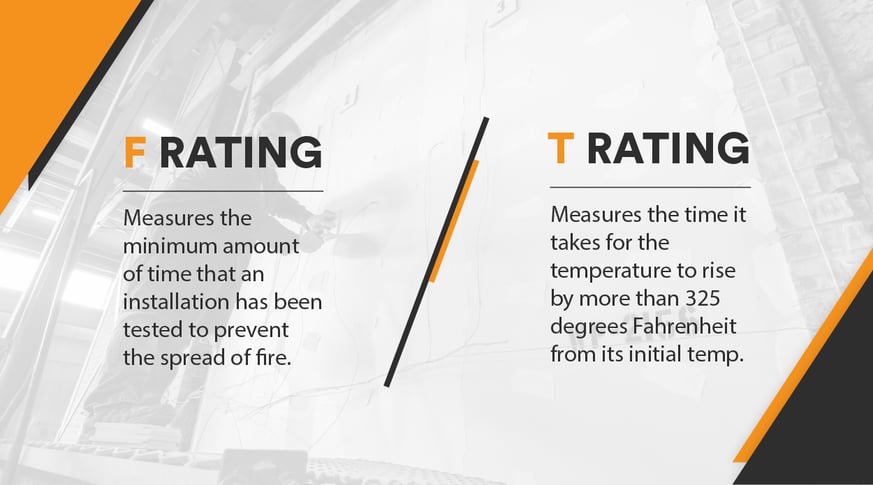
The F rating measures how long a firestop system prevents the passage of flames through a penetration opening. A firestop system must maintain its integrity and prevent flame breakthrough for the duration of the rated period, typically expressed in hours.
T Rating (Temperature Rating)
The T rating measures the time during which a firestop system prevents the temperature on the unexposed side of the barrier from rising more than 325°F (181°C) above its initial temperature.
The T rating addresses heat transfer through the assembly, which is particularly relevant for combustible materials on the unexposed side of the barrier.
Many applications require firestop systems to achieve both F and T ratings of sufficient length to meet building codes and project specifications. Depending on location and construction type, the T rating requirement may sometimes be waived, but it remains an important consideration in product selection and system design.
ASTM E814 Testing Process
The ASTM E814 test involves subjecting penetration firestop systems to controlled fire conditions to measure their effectiveness in preventing the passage of flames, smoke, and hot gases. The components of the test include:
- Specimen: The specimen represents the firestop system that is being evaluated and is installed within a test structure.
- Furnace: The furnace is used to expose the specimen to a standardized fire curve, which simulates a real-world fire scenario.
- Thermocouples: The temperature measurement devices monitor the heat transfer through the penetration firestop system generated during the test.
This evaluation provides valuable data on the fire resistance capabilities of building materials and assemblies and aids in developing and implementing effective fire safety measures in construction projects.
Common Challenges and Considerations in ASTM E814 Testing
While the ASTM E814 is essential for evaluating the fire safety of structures, various challenges need to be addressed during the fire testing process.
One such challenge is making sure that the test specimens accurately represent real-world applications. If there are inconsistencies in installation or deviations from the specifications of a manufacturer, this can negatively impact the reliability of the test results.
The test also needs to account for factors like the types of building materials and the joint configurations, making it crucial to carefully design and execute the testing protocol.
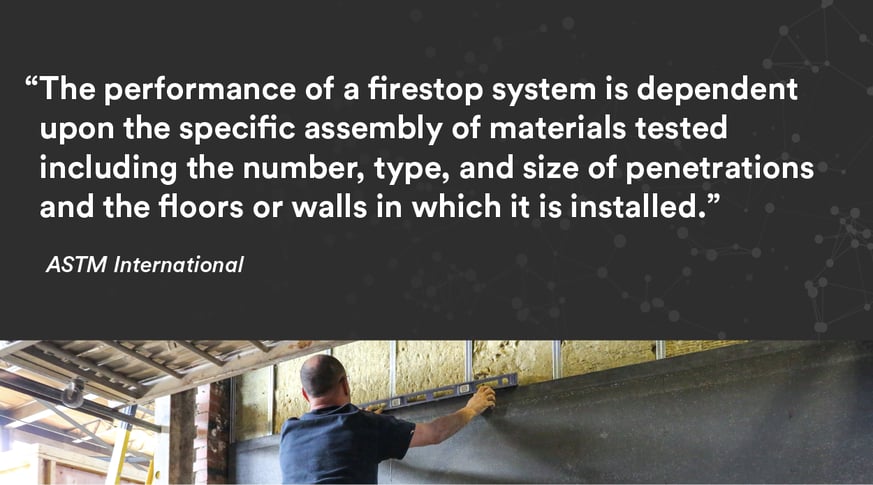
Another consideration is the need for qualified personnel to conduct the ASTM E814 tests. For the most accurate results, you’ll want to employ skilled technicians, engineers, and testing laboratories who have extensive experience in fire testing methods, like the team at NGC Testing Services.
ASTM E814 vs UL 1479
Another important standard in the fire testing of penetration firestop systems is UL 1479. While similar to the ASTM E814, there are notable differences in their testing methods and applications.
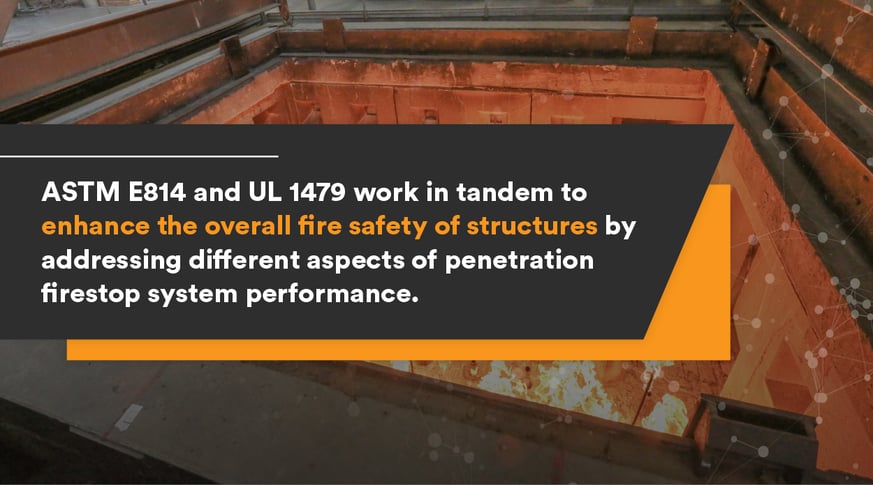
Both test standards use a specific test sample setup and standardized furnace time-temperature curve to assess the through-penetration firestop system’s ability to resist the passage of heat and flame, while maintaining its structural integrity when exposed to fire.
That said, UL 1479 has the option for two additional ratings — an L Rating (from air leakage test) and a W Rating (from water leakage test).
Both ASTM E814 and UL 1479 contribute significantly to the development and implementation of effective fire safety measures. Most professionals consider both standards when assessing firestop systems to ensure a thorough understanding of their performance characteristics and compliance with industry requirements.
Frequently Asked Questions About ASTM E814 and Firestopping
Why does firestopping matter in building construction?
Firestop systems are a critical component of passive fire protection, limiting the spread of fire and smoke without active intervention.
When walls, floors, and ceilings are penetrated during construction, those openings become potential pathways for fire and smoke to travel between compartments. Properly installed firestopping restores the fire resistance rating of the barrier, containing fire to its area of origin, protecting occupants and responders, preserving structural integrity, and maintaining code compliance.
ASTM E814 certification provides test-based evidence that a firestop system performs as intended under standardized fire conditions.
What are firestopping materials?
Firestopping materials are products used to seal penetrations in fire-rated assemblies, restoring the fire resistance rating of the barrier. Common firestopping materials include:
- Intumescent sealants and putties that expand when exposed to heat
- Fire-rated caulks and sprays
- Firestop pillows and blocks
- Firestop collars for plastic pipes
- Mortar and composite sheet systems
What types of penetrations require firestop systems?
Any penetration through a fire-rated wall, floor, or ceiling assembly requires an appropriate firestop system. This includes penetrations for pipes, conduits, cables, cable trays, ducts, and other building service elements passing through fire-rated barriers.
How do I select the right firestop system for my project?
Firestop system selection depends on the type of penetrating element, the fire resistance rating required for the barrier, the size of the opening, and the materials involved. Manufacturers publish tested system listings that specify the exact conditions under which their products have been evaluated.
Working with a qualified fire protection engineer or testing laboratory ensures the selected system meets both code requirements and project-specific conditions.
Why should I work with an accredited testing laboratory for ASTM E814 testing?
Accredited laboratories have the equipment, personnel, and quality systems required to conduct ASTM E814 tests accurately and consistently. Working with an accredited lab ensures your results are reliable, properly documented, and recognized by building officials, code bodies, and insurance carriers.
Safeguard Your Structures With Reliable Fire Testing
ASTM E814 provides the standardized framework for evaluating whether penetration firestop systems perform as needed when it matters most. Understanding the standard, its ratings, and its relationship to UL 1479 is foundational to making informed decisions about fire protection.
Working with an experienced, accredited testing laboratory is essential for producing reliable results. Errors in testing or result interpretation can lead to inadequate fire protection, code compliance issues, and significant safety risks.
NGC Testing Services brings deep expertise in fire testing, including ASTM E814 and the full range of firestopping evaluations. Contact us today to schedule your test and ensure your systems perform to standard.

This post was originally published in May 2024 by Mike Rizzo and was updated and republished in April 2026.