
Properly designed and installed fenestration improves indoor air quality, minimizes air leakage, and improves energy efficiency in homes and commercial buildings, helping owners and occupants save money and live and work comfortably.
But what is fenestration?
It refers to the design, placement, and arrangement of various systems and openings that can make up a building structures envelope, including:
- Windows
- Doors
- Curtain walls
- Skylights
Keep reading to learn more about the benefits of effective fenestration systems and why fenestration testing is key to understanding and evaluating building performance.
The Role of Fenestration in Buildings
Fenestration plays a big part in the overall design and functionality of a building and is crucial for several reasons:
- Energy Efficiency: High-performance fenestration systems help regulate indoor temperatures and reduce the need for heating and cooling.
- Natural Light: Properly designed fenestration allows for optimal viewing of daylight. This reduces the need for artificial lighting and enhances wellness, creating a more positive and uplifting environment.
- Ventilation: Windows and other openings provide essential air ventilation that improves indoor air quality by letting fresh air circulate.
- Aesthetics: Fenestration contributes to the architectural appeal of a building. The choice of windows, doors, and other openings can significantly impact a building’s overall look and feel.
- Safety: High-quality fenestration can improve security through stronger, more resilient window and door systems and enhance safety through proper emergency egress.
Understanding Fenestration Testing
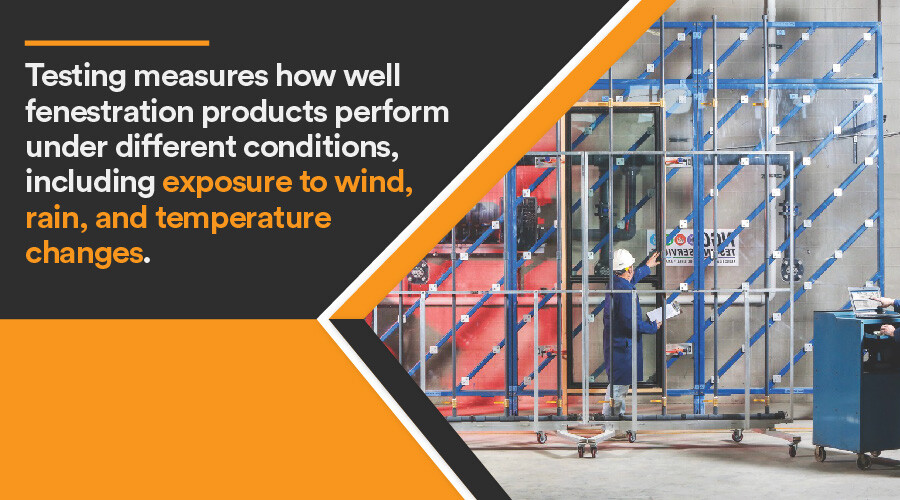
As the name suggests, fenestration testing is the process of evaluating the performance and quality of windows, doors, and other building openings to ensure they meet specific standards and criteria.
This testing assesses various aspects of fenestration products to verify their durability, energy efficiency, and overall functionality. Types of fenestration testing may include:
Structural Testing
Structural testing of fenestration products ensures their durability and performance under various environmental conditions. Key tests include:
- Wind Load Testing: This evaluates how well fenestration products withstand wind pressure. Products must remain intact and secure under simulated wind forces, ensuring safety and preventing failure during storms.
- Water Penetration Testing: This assesses resistance to water under simulated rain. Water is sprayed onto the product while it’s subjected to air pressure to detect leaks.
- Air Leakage Testing: This measures how much air passes through or around a fenestration product under specified pressure conditions to evaluate its airtightness and overall performance.
- Structural Integrity Testing: This examines the overall strength and stability of fenestration products under various loads and stresses. It tests how well products endure real-world conditions like wind pressure or impact loads without failing.
Acoustical Testing
Acoustical testing — including the assessment of Outdoor-Indoor Transmission Class (OITC) and Sound Transmission Class (STC) — allows for effective noise control to improve comfort, reduce distractions, and enhance overall well-being.
OITC evaluates how well a fenestration product reduces outdoor noise, such as traffic or landscaping sounds, entering indoor spaces. STC measures a fenestration product’s ability to block airborne sound across various frequencies, providing a single-number rating for sound reduction.
Fire Testing
Fire resistance tests assess how effectively windows and doors endure exposure to fire. These evaluations measure a product’s ability to contain the fire, prevent flames from spreading, and maintain its structural integrity under high temperatures.
By ensuring that your fenestration products also meet stringent fire safety standards, you not only comply with building codes and regulations but also play a crucial role in safeguarding property and protecting lives.
Analytical Testing
Thermal performance tests, a type of analytical testing, evaluate fenestration products' insulation and heat control.
Why Is Fenestration Testing Important?
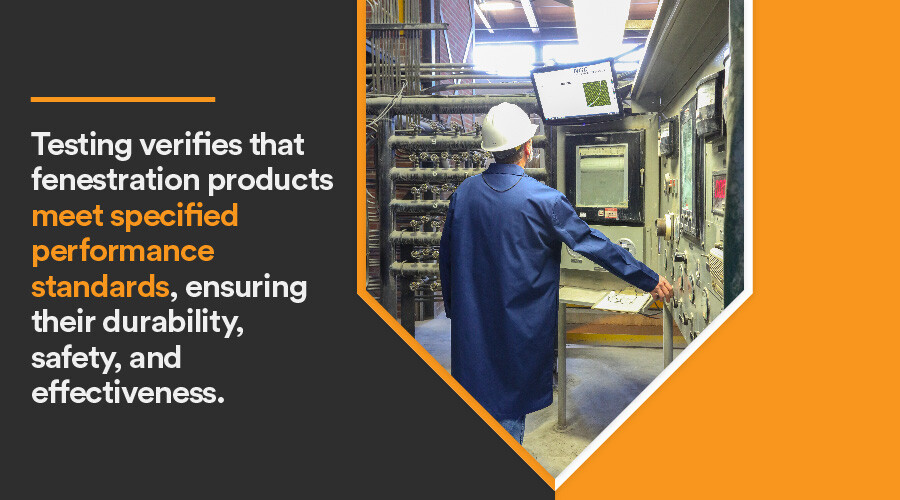
Fenestration testing is essential for assessing the safety and performance of your products. It ensures compliance with building codes and regulations, verifying that your products meet advertised safety specifications.
This rigorous testing upholds industry standards for quality, fosters trust with your customers, and keeps you competitive in the market.
Choosing a Fenestration Testing Laboratory
When choosing a fenestration testing lab, consider the following:
- Accreditation and Certifications: Ensure the provider meets industry standards and regulatory requirements.
- Experience and Expertise: Look for a provider with a proven track record in fenestration testing, as their experience will offer deeper insights into performance metrics and challenges.
- Service Range: Make sure their services match your specific testing needs.
- Customer Reviews and Case Studies: Check past work to gauge reliability and quality.
- Comprehensive Testing Solutions: Opt for a provider with a full-scale fenestration testing laboratory to ensure a thorough assessment of your product's performance across all parameters and conditions.
Frequently Asked Questions About Fenestration Testing
What is fenestration testing?
Fenestration testing evaluates windows, doors, skylights, curtain walls, and related building envelope openings for air leakage, water penetration, structural performance, acoustics, fire resistance, and thermal properties.
What products require fenestration testing?
Fenestration testing applies to windows, exterior doors, skylights, curtain wall systems, storefront systems, and similar building envelope components. Requirements vary based on product type, application, and applicable code or specification.
What is a fenestration testing laboratory?
An accredited facility equipped to conduct performance tests on fenestration products in accordance with ASTM and other applicable standards. A full-service lab can perform structural, acoustical, fire, and analytical testing in one location.
What is the difference between laboratory and field testing of fenestration?
Laboratory testing is conducted under controlled conditions to evaluate baseline performance and support product certification. Field testing of fenestration is performed on installed assemblies to verify that products perform as intended in actual building conditions.
What ASTM standards apply to fenestration testing?
Key standards include ASTM E283 (air leakage), ASTM E330 (structural static), ASTM E331 and E547 (water penetration), ASTM E1233 (structural cyclic), ASTM E1105 (field water penetration), and ASTM E783 (field air leakage).
What is acoustical fenestration testing?
Acoustical testing evaluates how effectively windows and doors reduce sound transmission, producing OITC and STC ratings. OITC is especially relevant for fenestration because it measures a product’s ability to reduce outdoor noise entering interior spaces. These ratings are important for noise-sensitive applications, including schools, healthcare facilities, and multi-family residential buildings.
How do I choose a fenestration testing provider?
Look for ISO 17025 accreditation, experience with your specific product types and test methods, a full range of testing capabilities, and equipment capable of accommodating your product dimensions.
For expert fenestration testing that meets industry standards and delivers reliable results, reach out to NGC Testing Services today. We’re here to help you ensure your products are safe, compliant, and high-quality. Contact us to get started.

This post was originally published in September 2024 by Mike Rizzo and was updated and republished in August 2026.